Day 1
Navratri Day 1: Deep Dive into Maa Shailputri, Origin, Rituals, and Beginner's Guide
Welcome to OmMangalam! If you are new to Navratri or want to understand its absolute roots, you are in the right place. Today, we begin our comprehensive journey with Day 1, dedicated to Maa Shailputri—the primal foundation of all creation and inner strength.
Overview
Navratri translates literally to 'nine nights' ('Nav' meaning nine, 'Ratri' meaning nights), a sacred festival dedicated to the worship of the Divine Feminine energy (Shakti). Rooted deeply in ancient Vedic traditions and texts like the Markandeya Purana and Shrimad Devi Bhagavatam, Navratri is much more than a cultural celebration; it is a profound period of spiritual introspection, physical rejuvenation, and energetic alignment. When we ask why there are exactly nine nights, ancient texts and scientific observations point to deep truths: there are nine openings or 'doors' in the human physical body (two eyes, two ears, two nostrils, one mouth, and two lower openings), representing the inner gateway through which our soul's consciousness must travel and awaken. Furthermore, nine nights mirror the nine-month gestational cycle of creation, signifying how human life and spiritual consciousness are born and nurtured.
Maa Shailputri
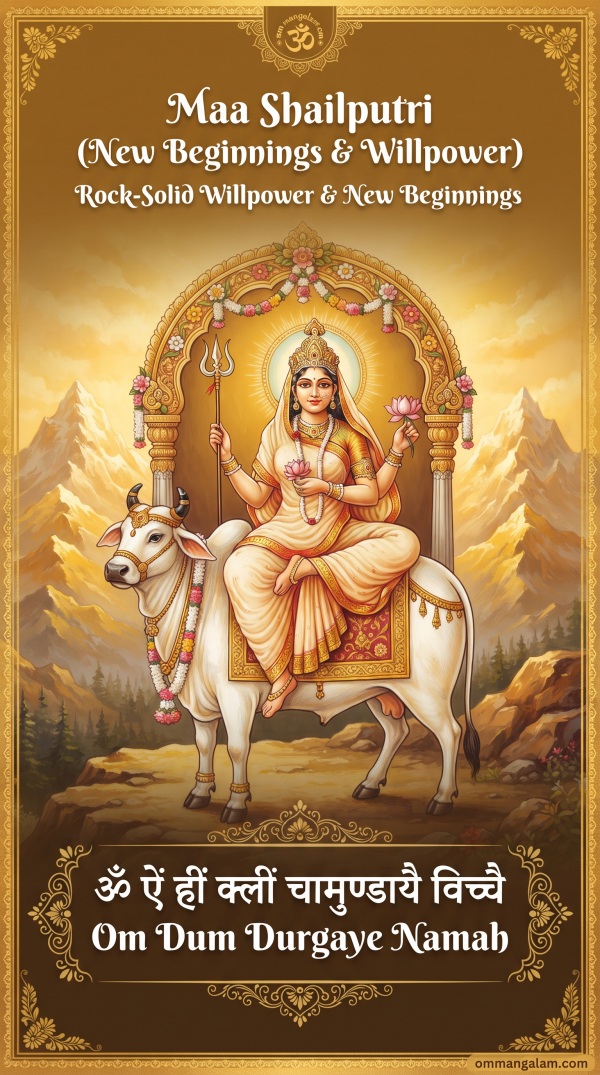
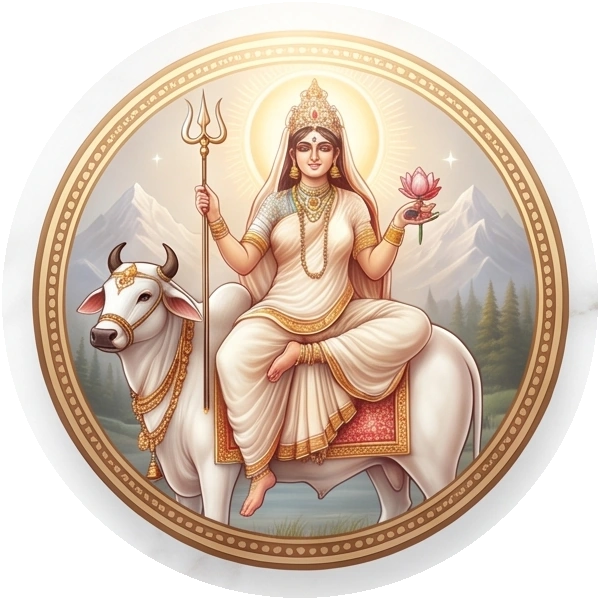
The word 'Shail' means mountain (specifically the Himalayas) and 'Putri' means daughter. Therefore, Shailputri translates to 'the daughter of the mountain.' She is the absolute primal, newborn form of Mother Durga in her manifestation as Goddess Parvati.
Maa Shailputri represents absolute stability, rock-solid willpower, and the unyielding strength of a mountain. In human life, she signifies new beginnings—whether you are starting a brand-new business project, shifting to a new home, entering a new relationship, changing careers, or welcoming a newborn into the family. She provides the inner courage and psychological grounding needed to face monumental life shifts without losing your center.
Color: Yellow, representing warmth, optimism, vitality, and the bright spark of new beginnings.
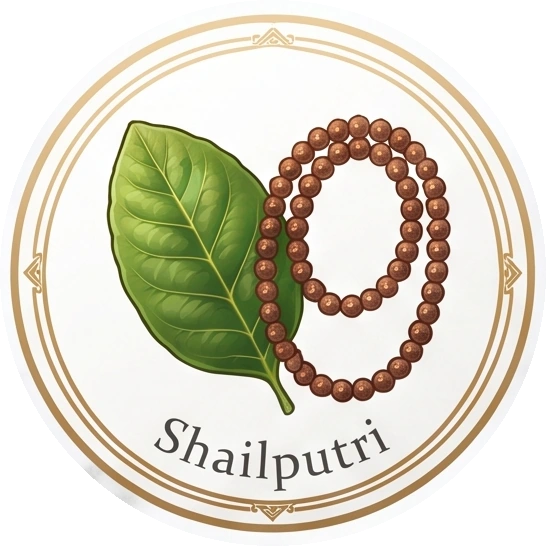
Her primary associated medicinal herb is 'Harad' (Terminalia chebula), celebrated in Ayurveda as a master purifier. Consuming or utilizing Harad helps flush out physical toxins, balance bodily humors, and clear physical and mental heaviness, setting a clean slate for the body's detoxification process during Navratri.
For someone entirely new to Navratri, offerings are physical expressions of gratitude and devotion. On Day 1, the primary offering consists of lighting a pure ghee lamp (diya) that is meant to burn continuously or be lit fresh every day for the next nine days. Pure sweets, white lotus flowers, or simple fresh fruits are also offered to honor her gentle yet powerful potential.
Mantras
Om Dum Durgaye Namaha
O Divine Mother Durga, who dispels all miseries and protects us, I bow to your pure, harmonizing energy.
Om Hreem Dum Durgaye Namaha
A powerful seed-syllable (Beej Mantra) combination where 'Om' represents the Sun (spirit), 'Hreem' represents the Moon (mind), and 'Dum' governs Mars and protective energy, effectively balancing all planetary influences within the practitioner.
Japa guidance
A red sandalwood (Rakta Chandan) rosary or a clean Rudraksha mala.
Chant the mantra exactly 108 times (one full rosary round) daily with complete focus and deep emotional connection (bhaav).
Pooja steps
- Ghatasthapana (Kalash Establishment): Cleanse your prayer space early in the morning. Set up a sacred copper or earthen pot (Kalash) filled with sacred water, mango leaves, and a coconut on top, symbolizing universal creation.
- Sowing the Jaware (Barley): Take a small earthen tray filled with clean soil and sow sacred barley seeds. Water them gently over the next nine days; their lush green growth symbolizes flourishing life and prosperity.
- Setting Your Intention (Sankalpa): Because Day 1 governs new beginnings, write down your genuine life intentions or new project plans in the present tense (e.g., 'My new venture is thriving with success and stability') on a clean piece of paper.
- The Ghee Lamp Ritual: Place your written intention paper securely underneath a pure ghee lamp, light the lamp, and invoke Maa Shailputri to grant you the unshakeable mental strength of a mountain.
- Meditation & Chanting: Sit comfortably facing east or north, hold your red sandalwood mala, and chant 'Om Dum Durgaye Namaha' 108 times with a calm, peaceful mind.
Modern-life alignment
In modern, fast-paced life, we constantly face sudden career changes, project launches, and emotional burnout. Aligning with Maa Shailputri on Day 1 teaches us the art of emotional grounding. Instead of letting anxiety scatter our focus when starting something new, we use this day to anchor our mind, establish a disciplined routine, and adopt a clean, toxin-free Satvic lifestyle that rejuvenates both body and mind.
FAQ
Maa Shailputri represents the absolute beginning, new roots, and foundational stability. Just as a newborn baby or a fresh seed represents pure potential before it takes shape, the first day of Navratri invites us to ground ourselves, set clear intentions, and build unshakeable willpower like a solid mountain before embarking on any new journey in life.
Related
May the rock-solid strength and grace of Maa Shailputri bless your new beginnings on this first day of Navratri. Stay tuned with OmMangalam as we unfold the secrets of Day 2 tomorrow!